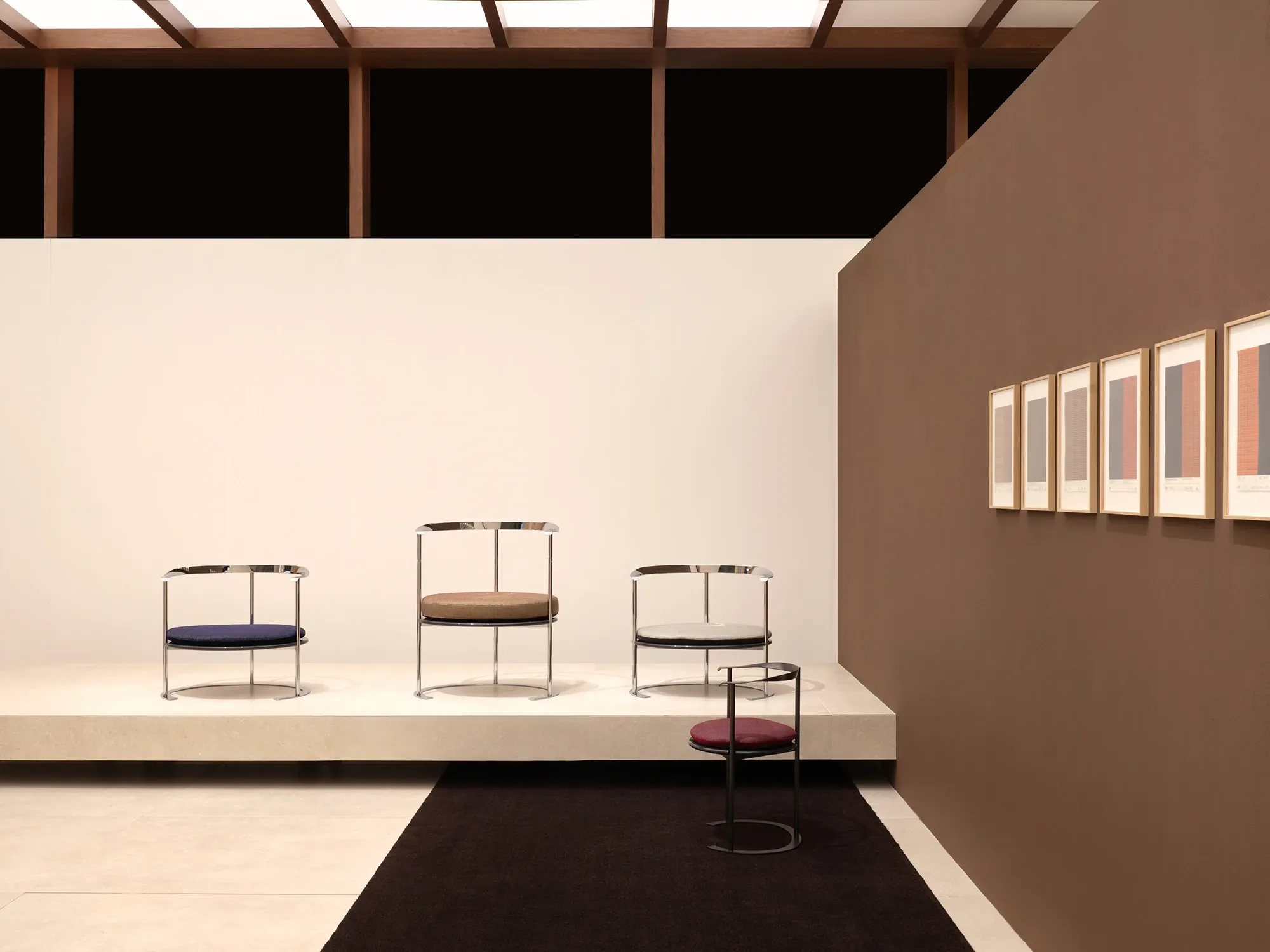
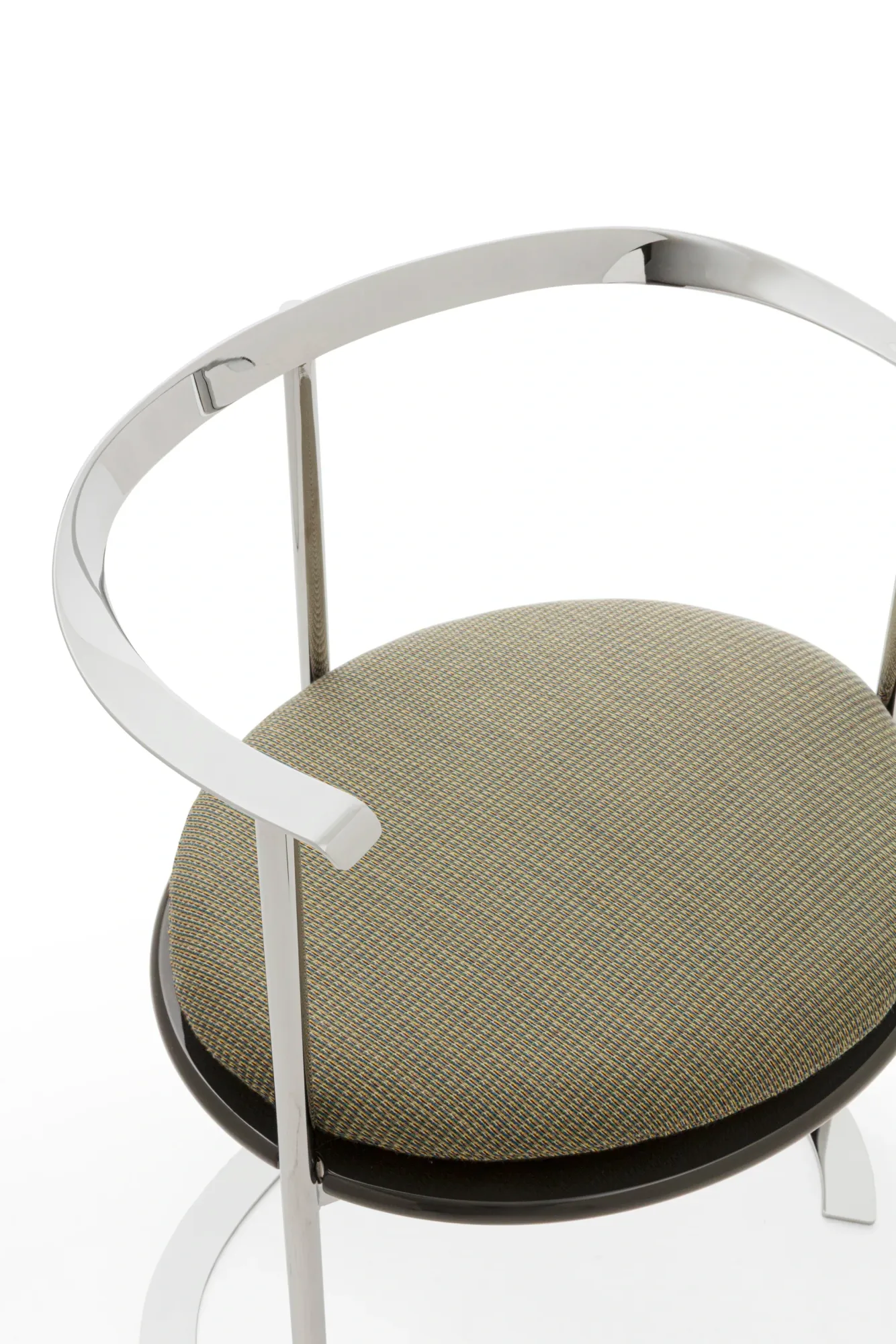
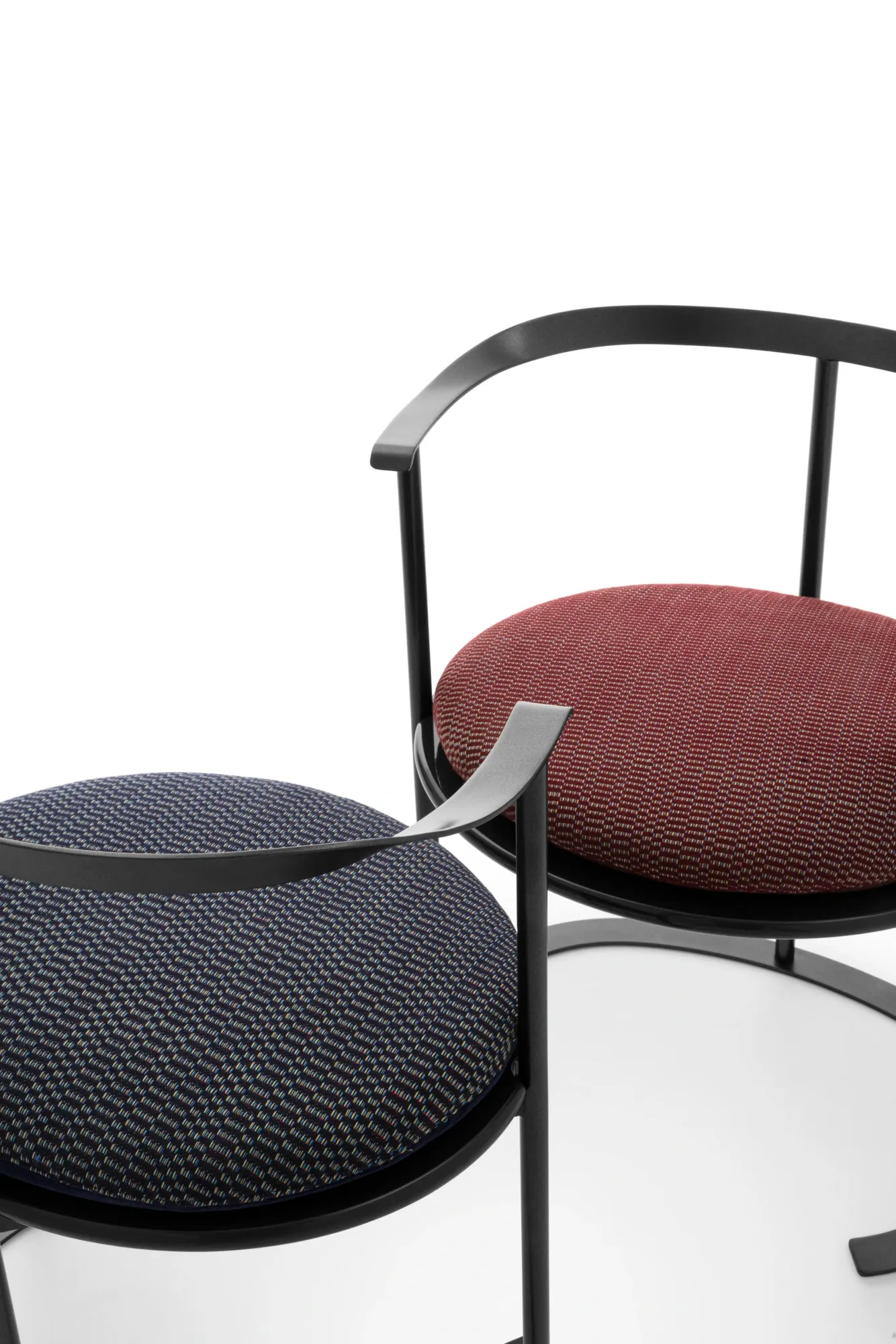
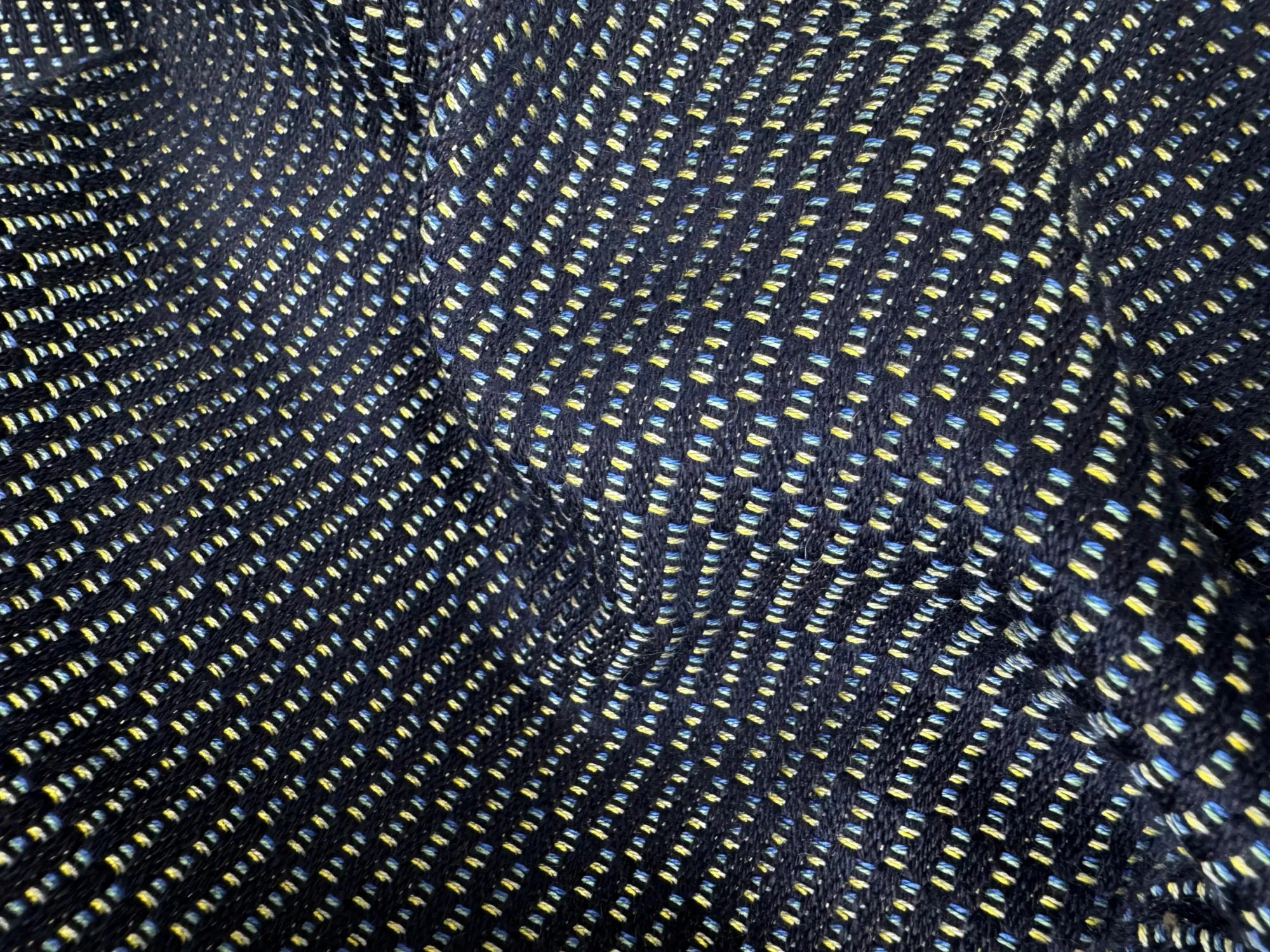
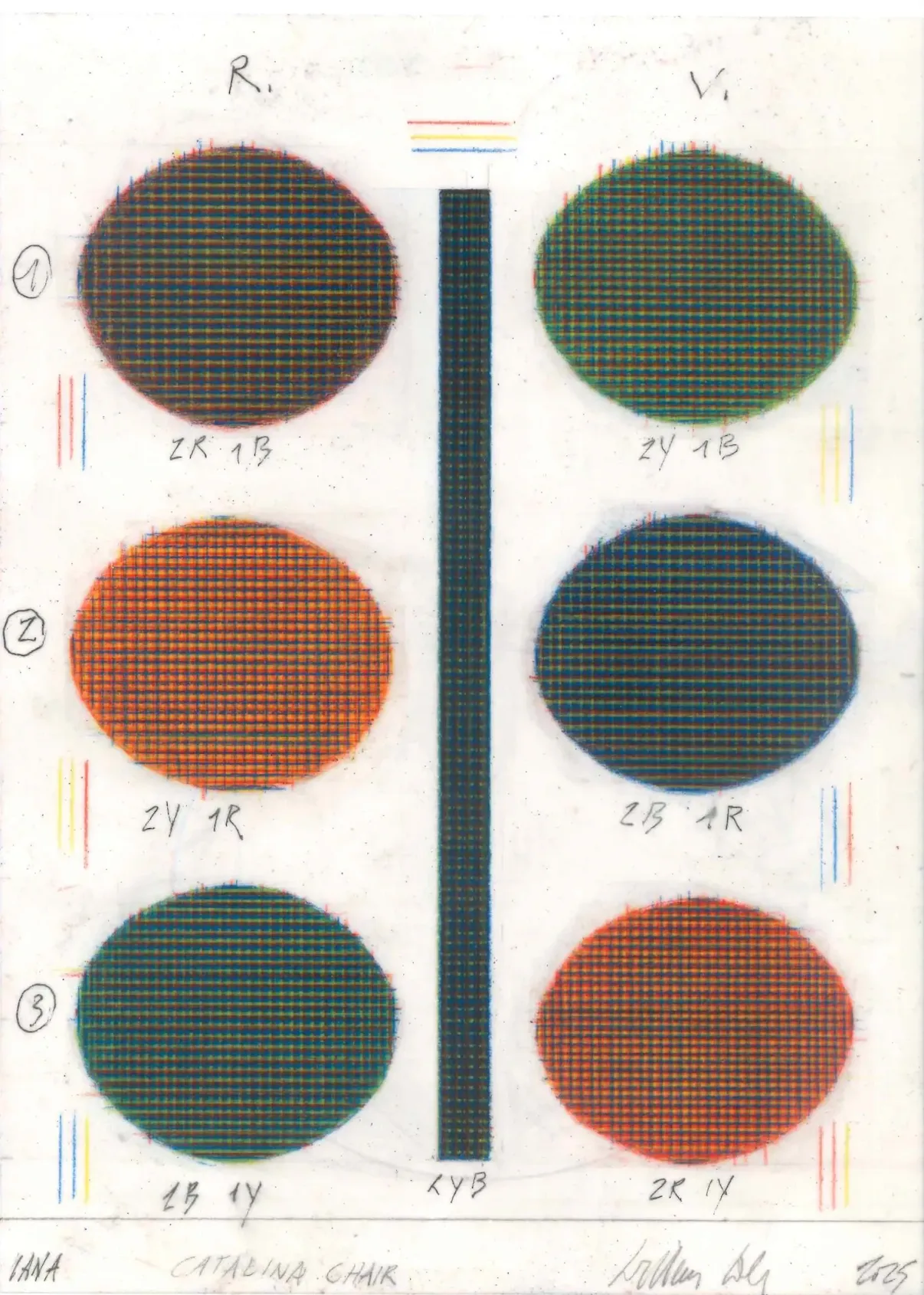
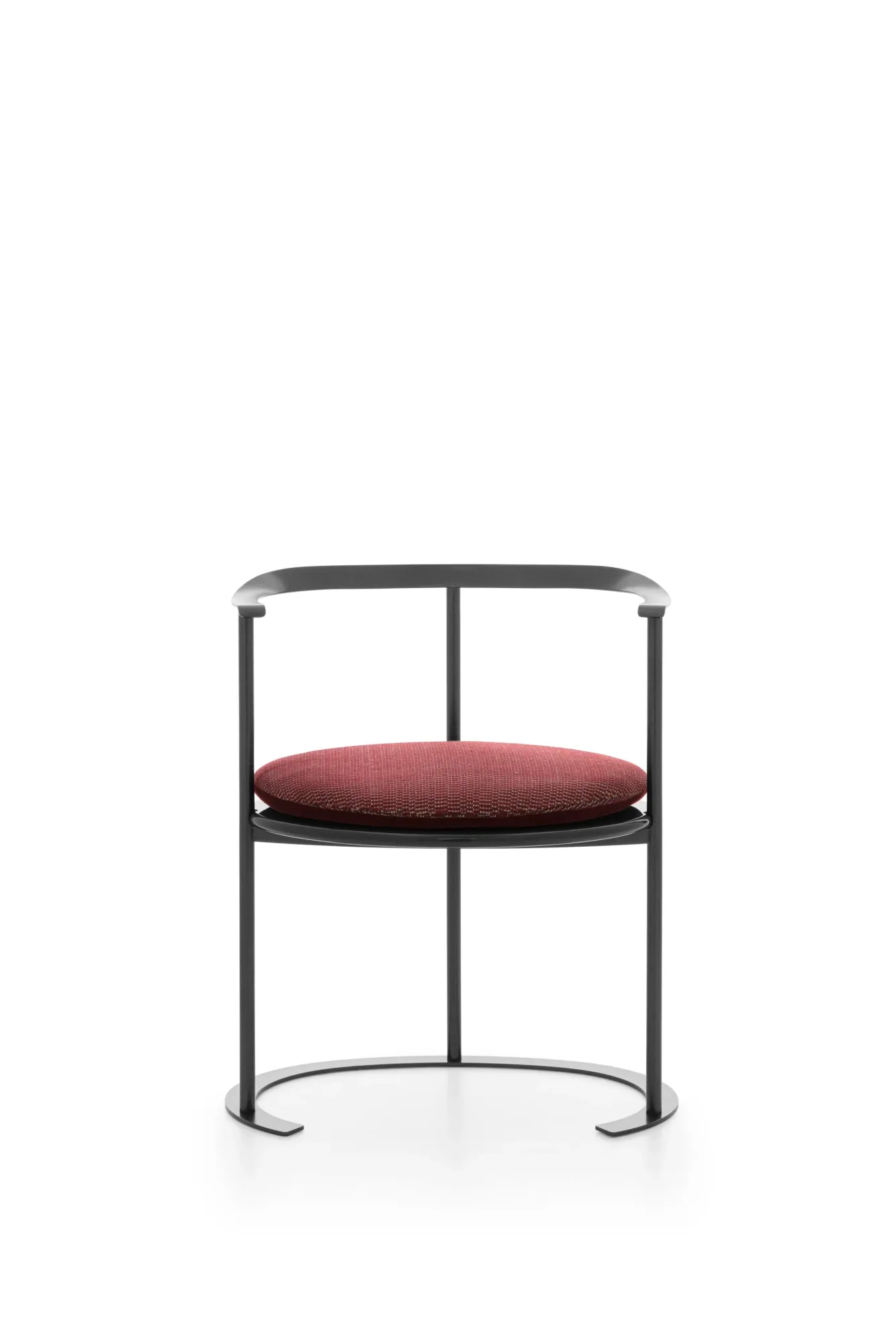
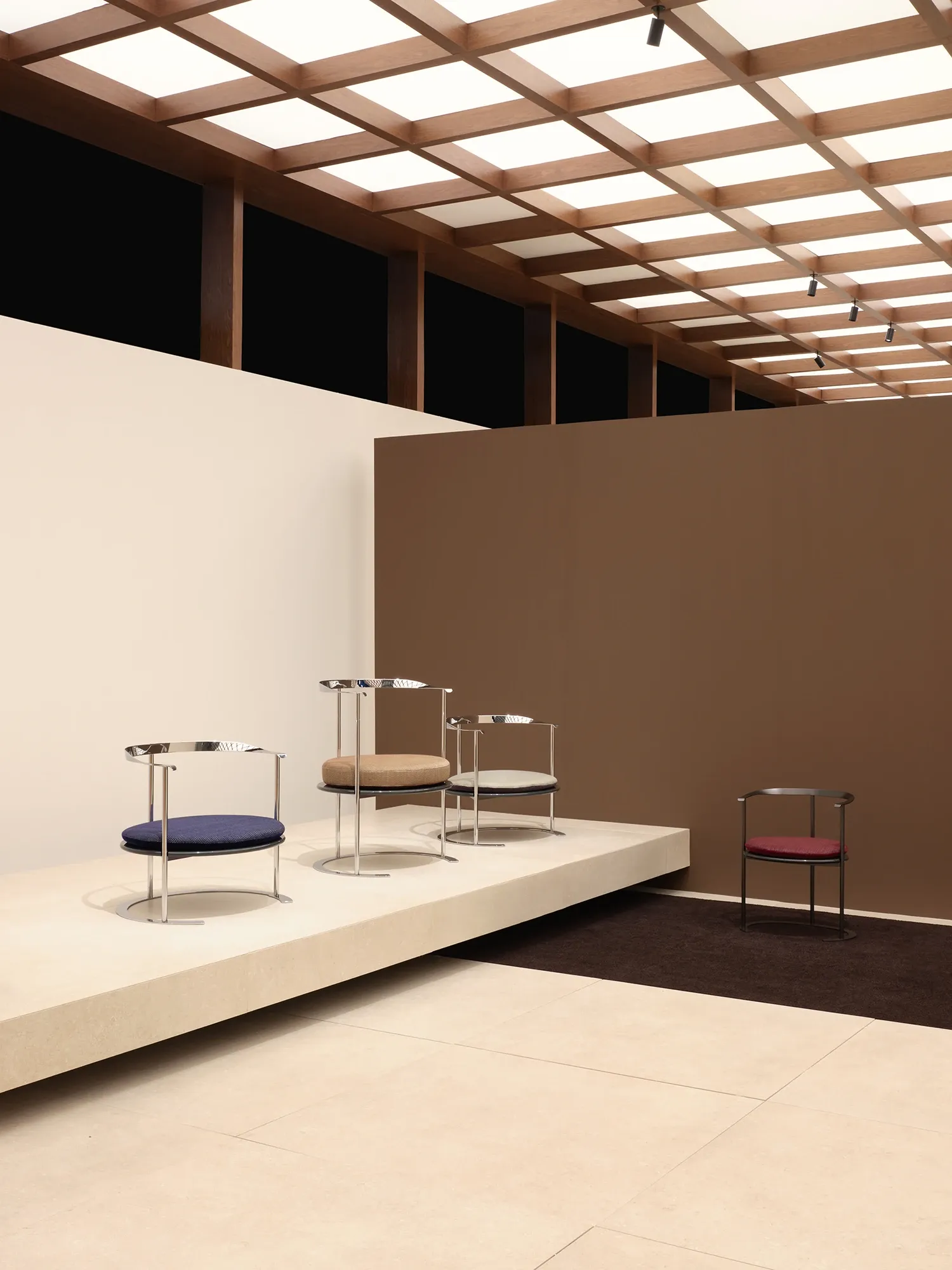
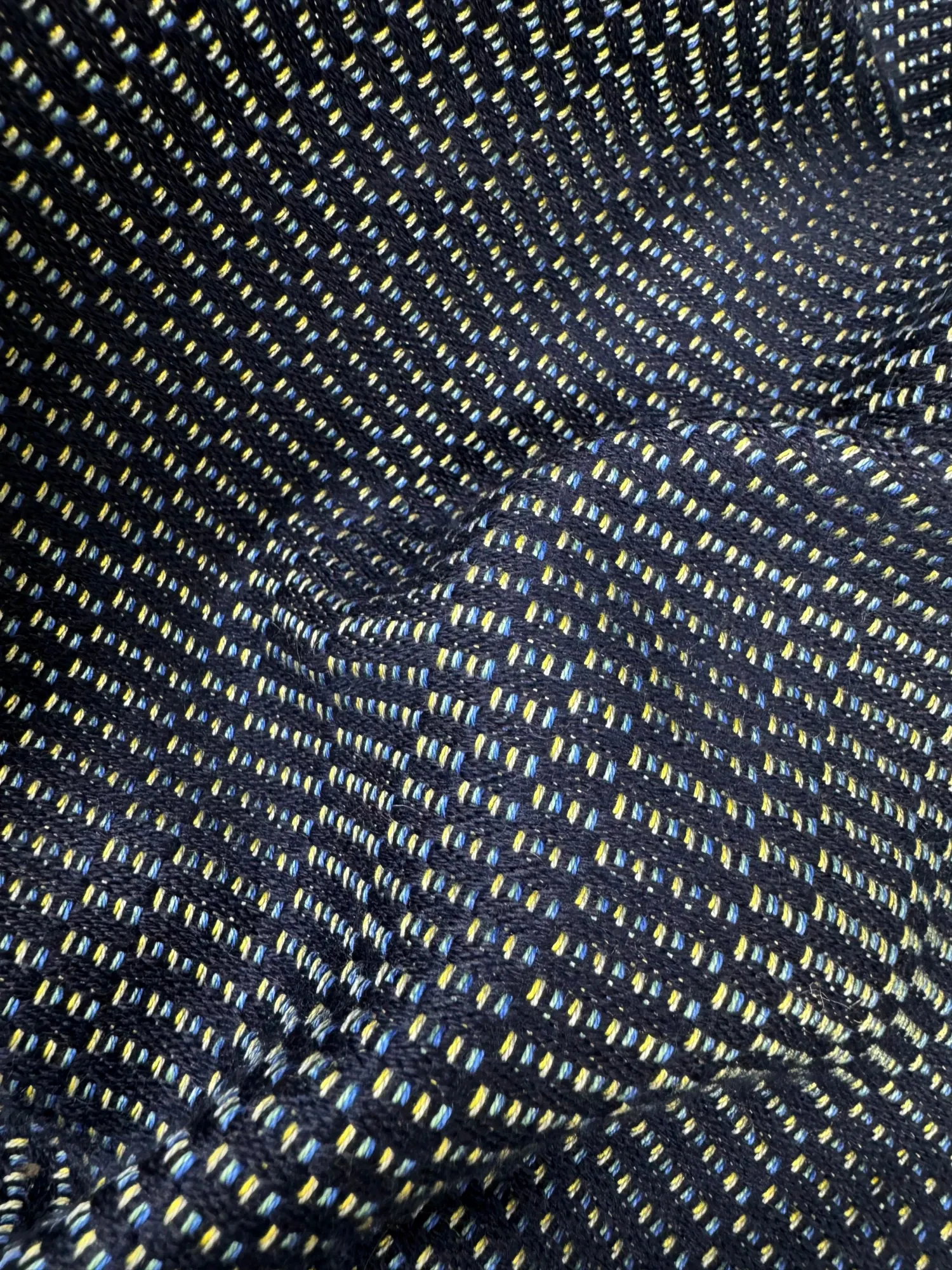
The new textiles developed for the cushions of the Catilina chair begins with Haus Nuller's reflection on Luigi Caccia Dominioni's design methodology. Looking across his work in architecture and design, the studio identified a recurring principle: the line, not as an applied graphic element, but as a constructive force that organises form within a system of relationships. From this perspective, the line becomes central to the research, not as a mark but as a generative device capable of moving across disciplines while maintaining the same internal logic. On this basis, Haus Nuller brings artist Willem Cole into the dialogue. His work is grounded in an essential visual language built on the use of the three primary colors - red, yellow and blue - arranged through modular relationships. The textile is approached as a methodological translation rather than a formal one. Instead of reproducing Cole's drawings, Haus Nuller interprets their internal logic. Line, rhythm, proportion and color relationships become operative principles translated into weaving, where variations in yarn, density and structure create depth and material complexity.
II progetto dei nuovi tessuti per i cuscini della sedia Catilina nasce da una riflessione dello studio tessile Haus Nuller sulla metodologia di Luigi Caccia Dominioni. L'analisi del suo lavoro, tra architettura e design, porta a individuare nella linea una costante: non un elemento grafico applicato, a un principio costruttivo capace di organizzare la forma all'interno di un sistema di relazioni. Da questa lettura, la line diventa l'elemento centrale della ricerca, non come segno ma come dispositivo generativo in grado di attraversare discipline diverse mantenendo una stessa logica interna. Su questa base, Haus Nuller coinvolge Willem Cole, artista il cui lavoro si fonda su un linguaggio visivo essenziale costruito sull'uso dei tre colori primari - rosso, gallo e blu - organizzati secondo relazioni modulari. Il tessile diventa cosi il luogo di una traduzione più metodologica che formale. Piuttosto che riprodurre i disegni di Cole, Haus Nuller ne interpreta la logica interna: line, ritmo, proporzione e relazione cromatica diventano principi operativi trasferiti nella tessitura, dove variazioni di filato, densità e struttura generano profondità e articolazione materica.